From April to July 2016 I have been fortunate enough to be travelling, learning and enjoying some R & R supported by a Woolf Fisher Fellowship
My next few posts will form a summary of that learning journey as Dorothy and I travelled though Hawai'i, Europe and Nth America.
Thanks Woolf Fisher Trust, for this extraordinary learning experience!
Monday 25 April
Visit to Hale Kula Elementary on Schofield Military Base (now known as Daniel Inouye Elementary School)
Principal Jan Iwase
7:30 a.m. Denied access as foreigners with no armed services sponsor onto a US Military Base. We were told very firmly that we were unacceptable in our current state. Brendan, our good friend, guide and organiser no doubt found this frustrating and embarrassing as people were waiting for us in the school, but was carefully compliant and immediately began working on “Plan B”
8:00 a.m. Brendan has Plan B organised for us to visit a school down the road, when Jan, (principal from Hale Kula) calls to say she has a military sponsor for us.
8:30 a.m. we make it onto base after displaying our beautiful NZ passports and from there on it’s like being back in Hawai’i. The manaaki is amazing. Gifts of leis, food, drink, -a really warm welcome.
This school is receiving a $33M property upgrade mostly courtesy of Dept of Defence, after President Obama realised as a result of parent pleas that Base Schools were in an embarrassingly shoddy condition.
The state contributes 20%.
As part of a state initiative these kids all got MacBook Airs 2 years ago.
This school has MLE’s in the new build (if the teachers choose to use them that way) and have blended learning going on although they have 1:1 potential. Their key question for us was ‘how did we get all our teachers onboard?’
As in much of the US they are talking about integration rather than fully digital learning.
The teachers in the MLE’s were taking the option of keeping them closed into cells, (much as our some of own teachers did when we first cut holes through the walls to create more flexible spaces.
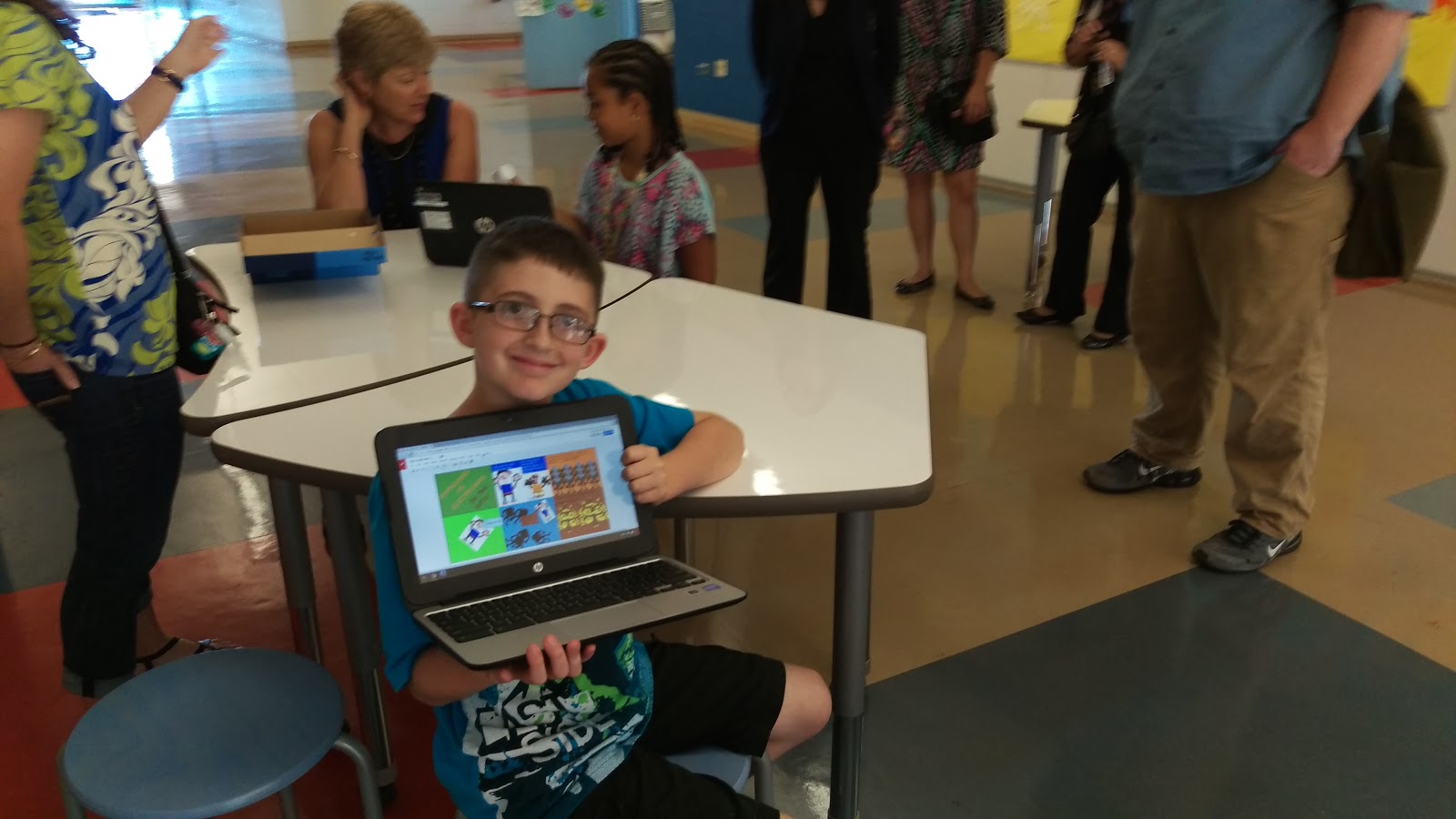
Here's Liam proudly showing me the comic he's building in Google Draw.
5 kids came out of class to show us their very cool work.
Like Pt England, these people have lived through construction, noise and dust for the last two years. Working hard with incredibly high turn-over of students because they are a military base school.
Principal Dale was absent but kindly allowed us to come, because of the muck-up at the gates of the base earlier in the morning.
We were hosted by Sean, Kat & Barron, -all VP's
Their annual theme for 2016 is Productive Perseverance.
They have 774 students
Like other schools we visited they got $1M for New tech approx 2 years ago.
Kids all have MacBook Airs. Principal insists they are out and available for kids to use at all times. The school owns the devices and this was the case in all the schools we visited.
They described their position in development as “getting our feet wet with blended learning”.
They used phrases we are familiar with like “working for sticky Learning”.
Some of the classes look like ours in the way they are open, kids are mobile and devices are being used.
They are making a real effort to use digital tools to enhance learning.
Using Lucid for School Newsletters
They have nice youtubes in digital newsletters
They have invented and funded a teaching position called “Learning Innovation Specialist” (we really liked this and thought we might “borrow” it!)
Their focused inquiry question is; “how do you go from good to great?” What a great focus!
They are focusing on building an innovation team
Their Tech Cadre has grade level teacher reps
They have a very nice standardised At a Glance Spreadsheet so everyone can see where kids are up to in their assessments
Very cool school. Inside quite a stark external environment, this is what you find.
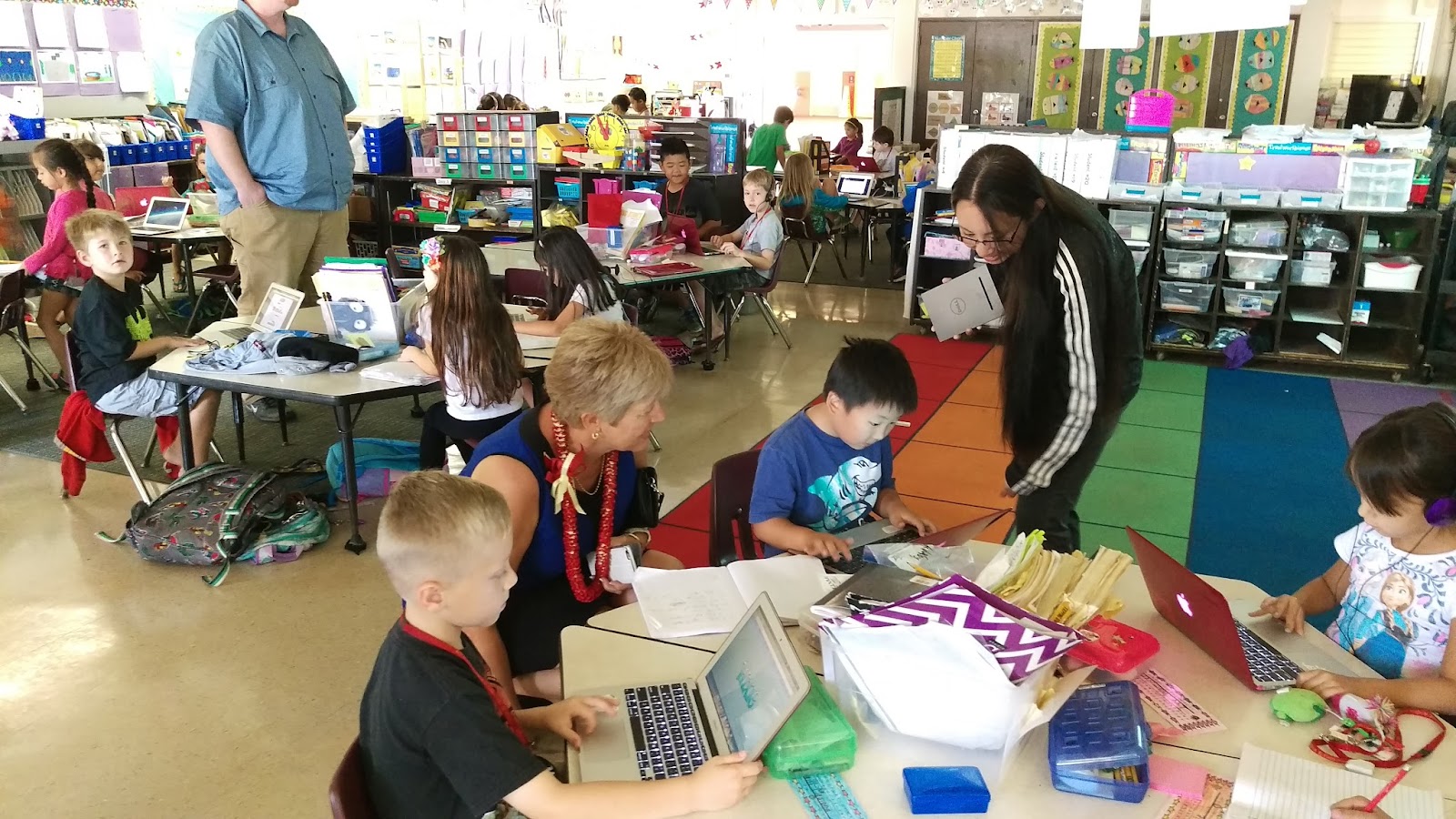
Principal Lisa Ann Higa
Immersion Unit Leader; Kumu Kai Mana
This is a real decile 1A school or lower. The Nanakuli valley is a Hawai’ian Homestead and many of the homes are significantly underprivileged.
These people are striving to succeed against the odds.
We had lunch with the principal, Lisa and the co-ordinator of the complex or cluster, Terri. We received beautiful lei (we received lei at all the schools) but at this school they were real and very beautiful. Mine was made from the Tea Plant, Dorothy’s was Frangipani. -The real deal.
Lunch was in polystyrene boxes like when you buy Fiafia food, and was real, made on the day Fiafia food. Pulled pork (fresh from the umu/imu) , rice , poe (pulped taro), jelled, chilled coconut creme, banana cake. Wow.
We visited the immersion unit and were greeted beautifully. The teacher, Kai Mana, loved his kids and they loved him (and said so)
There was some excitement here because these kids had been involved in the Google Hang-Outs around the Mālama Honua Landing at Pt England.
The kids all gave us hugs like at PES and it felt like home.
The population is 100% polynesian and if you stuck red uniforms on them, you would think you were at Pt England.
This was a very heart warming visit. The way the kids behaved and the manāki we received were just lovely.
This school is getting its best success out of its immersion unit and we could see that some of the rest of it was “still under development.”
Lisa has been there 2 years and is clearly doing a turn around job. These Guys received the same New Tech grant as the other 2 schools we visited, so kids all have 11” MacBook Airs.
The kids talked cheerfully about what they were doing and were engaged and confident, but couldn’t necessarily distinguish their learning from their doing. It was clear they were learning though.
The school gardens are pretty cool.
Kaimana and his kids are really keen to have Hang-Outs with our kids.

Tuesday 26 April
Contacts
Holoua Stender, Executive Vice President of Education
Phyllis Unebasami, Managing Director, Ho`olaukoa Educational Systems and Strategies
Kamehameha Schools
Kamehameha Schools is in some ways a misleading name in that although this enterprise runs three beautiful K - 12 Campuses, and many pre-schools, it’s actually the name of the Enterprise that holds the land, investments and and businesses that Princess Pauahi left in trust for 5 trustees to administer.
This $11B enterprise has clearly stated purposes:
Purpose
Kamehameha Schools’ endowment exists to support our educational mission to fulfill Pauahi’s desire of creating educational opportunities in perpetuity to improve the capability and well-being of people of Hawaiian ancestry.
Background
Pauahi’s estate encompasses more than 363,000 acres throughout Hawai‘i — approximately 169,000 acres zoned for agriculture, 189,158 acres in conservation, 15,000 acres in commercial and 3,000 residential acres — and generates income to serve more than 48,000 learners and caregivers per year.
All Kamehameha Schools’ land-based and investment decisions are filtered through a set of five core principles — culture, community, education, economics, and environment. This balanced approach to decision-making ensures the perpetuation of Pauahi’s legacy, her lands and the execution of her will.
We had an absolutely delightful breakfast meeting with Phyllis and Holoua in an engagement that was brought about by Prof Michael Fullan, who we also expect to visit on this trip.
We discovered that we have much in common, with real desire to bring about practice change for better outcomes for Polynesian learners and similar but different struggles in trying to bring this about.
KS have a support type relationship with other ‘native schools’ as their trust deed has set the mission stated above. Consequently they have a relationship with Nanakuli (where we were the day before) and it may be that we could have future involvement in their effort to bring greater success and better outcomes to their indigenous population, many of whom suffer significant disparity.
KS are most like our Integrated Schools, but with a far larger endowment.
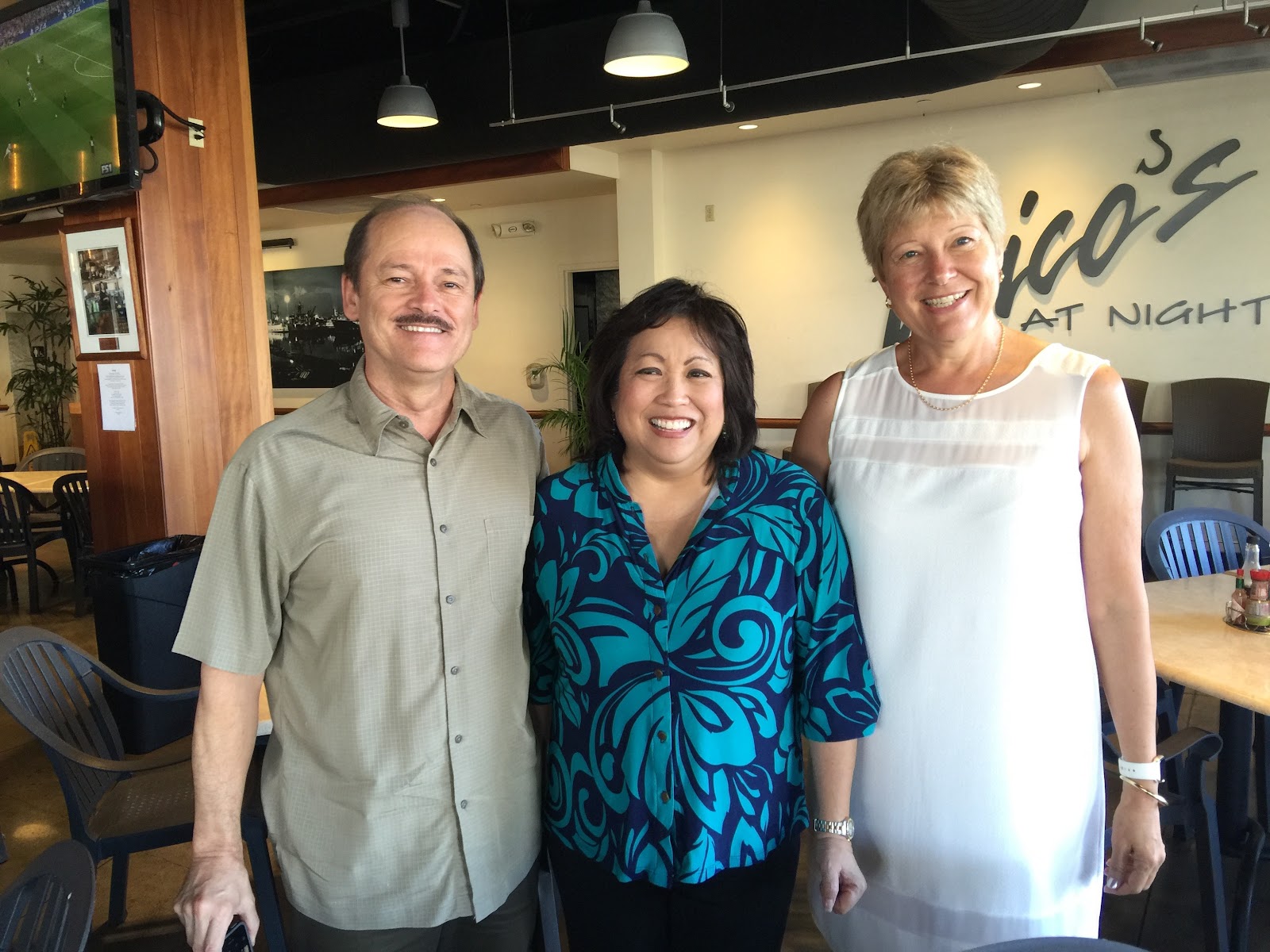
The principal, Earl, has just won a position as Superintendent of Stanford School District and Dorothy thinks I should apply for the job here! I think I’d better make sure I get back to Pt England on time!
 Phyllis is in charge of all the teacher development for KS and this includes their support for Hawai’ian language and culture schools. We are to work out with her, Holoua and Michael Fullan how Manaiakalani might partner with them in the future. There are very real partnership possibilities here.
Our next education visit was to the Marine Education Training Centre on Sand Island.
This is where our friends from Mālama Honua hang out along with their va’a or waka.
Once we signed in, our 1st visit was over the historic vessel Hawai’iloa along with one of the early navigator companions of Nainoa, “Uncle Billy”.
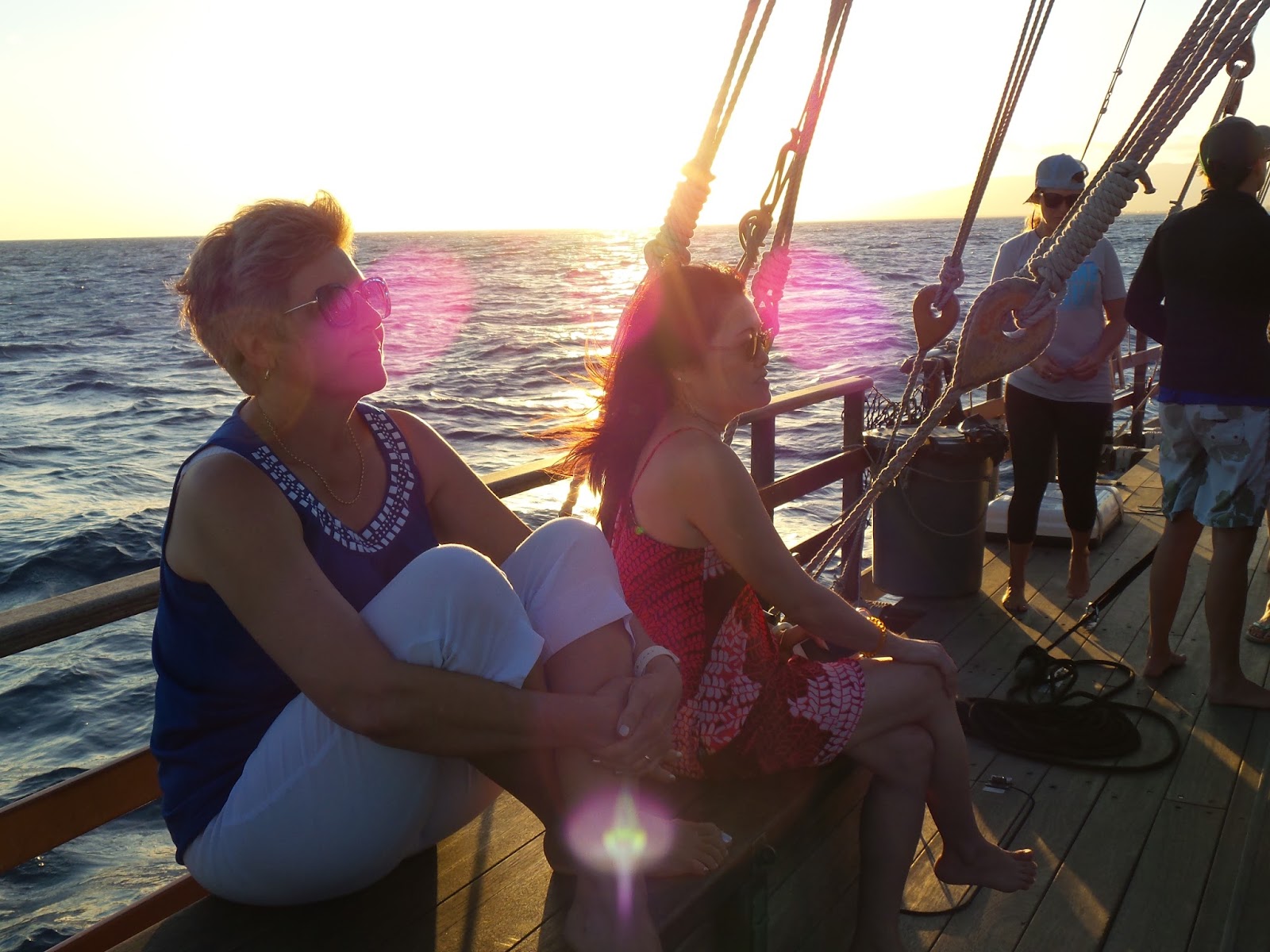 We then had the outstanding privilege of a sunset sail on Hikianalia. This more than made up for missing out on sailing on her in the Waitemata last year! How cool to do this off O’ahu in her home harbour.
On the way we learned lots about the va’a from Na’alehu and “Uncle Bob” the navigators, as well as learning about the shoreline and local geographic features. I loved hearing tales of sailing to different tricky destinations like Rapanui & Tahiti.
To say I loved it, is rather mild. Definitely my idea of an extremely great time!
Ke Kula Kaiapuni 'O Ānuenue
Miki Tomita, who spent time at Pt England for the Mālama Honua visit, was our escort for the 2nd day of school visits.
Ānuenue is the equivalent of a New Zealand Wharekura, i.e. its an immersion school and goes from K-12.
The principal, Glen is a lovely calm elder statesman in the place, where we were shown around by VP Baba.
Their inclusion of traditional crafts, built to honour parents and grandparents, along with their commitment to land and gardening was a real challenge to us.
When it comes to digital pedagogy, we are achieving a great deal, without the $1M grant for technology, most of these folks got.
By and large, our buildings are superior in build quality and design. Something our welfare state and government can be very proud of.
This state has so much money it isn’t funny, but the way property taxes in poor areas have to fund school buildings causes so much inequity.
Never have we seen such run down school facilities in such close proximity (i.e. 3 city blocks) to really rich and fancy ones.
It would be like Pt England built like St. Kentigern College, 4 blocks away from Ruapotaka looking as though it were in Papua New Guinea!
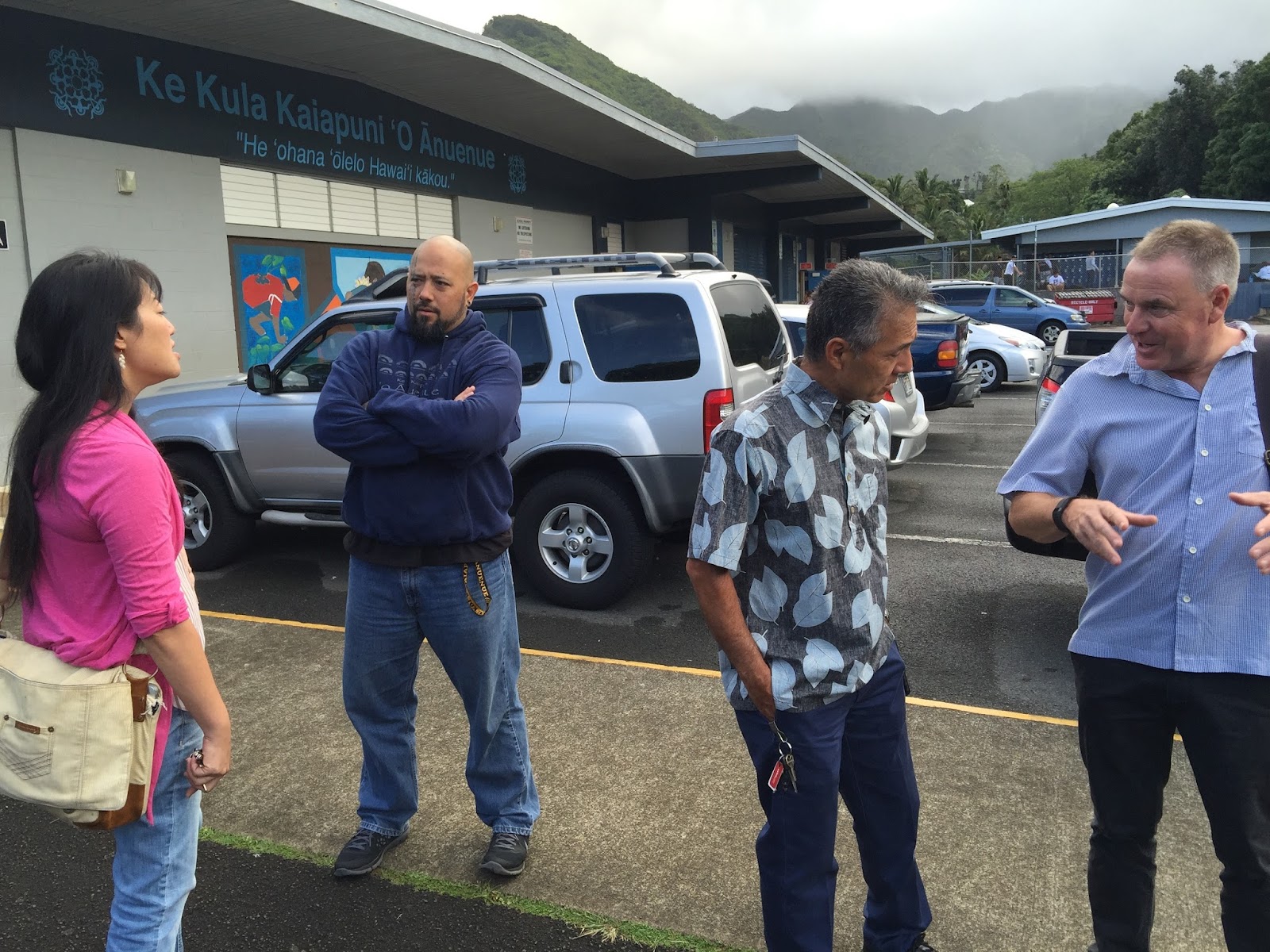 Anyway, back to Ānuenue, -they are like the days of the early kura movement, making the best of what they have, working in funny old buildings, beautifying the lands around them. Many native Hawai’ians choose to send their kids here and you can see and feel the love all around you.
Like other Hawai’ian schools, the welcome is warm, but in the main the classroom is the domain of the class teacher and people don’t wander in and out like we do.
Pt Englanders will recognise Miki, I’m talking with Glen, Baba waits patiently.
These guys are interested some of our stuff, including the questions we use to run our parent meetings.
Along with other schools we visited, they are also keen to have Google Hang-outs with some of our classes.
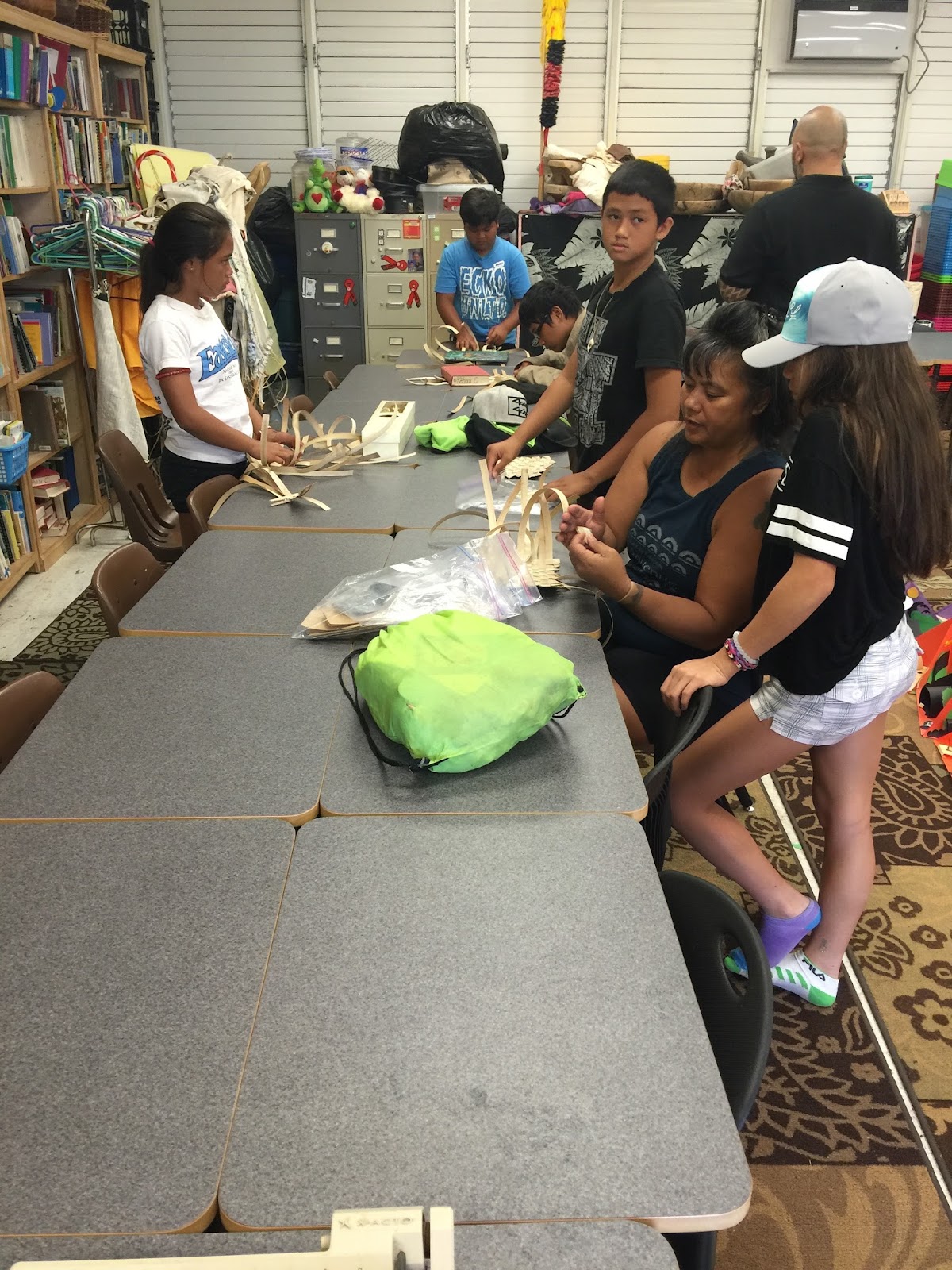
All the kids in this class were making different kinds of Mothers’ Day or Grandmothers’ gifts, by tradtional means.
Some were weaving, some were polishing stones, some were sanding and polishing shells.
All of them were to be presented with love to someone special.
Really cool to see.
Like the early days of the kura movement, they have few resources, and a massive problem with assessments not being in the language of instruction.
Like our kura, the kids do poorly in tests till they reach the equivalent of our Y10 and then they just take off and do really well, so the parents have to hold their nerve and not shift them out to mainstream at Y6, (like some of ours do).
And then there’s the gardens………...
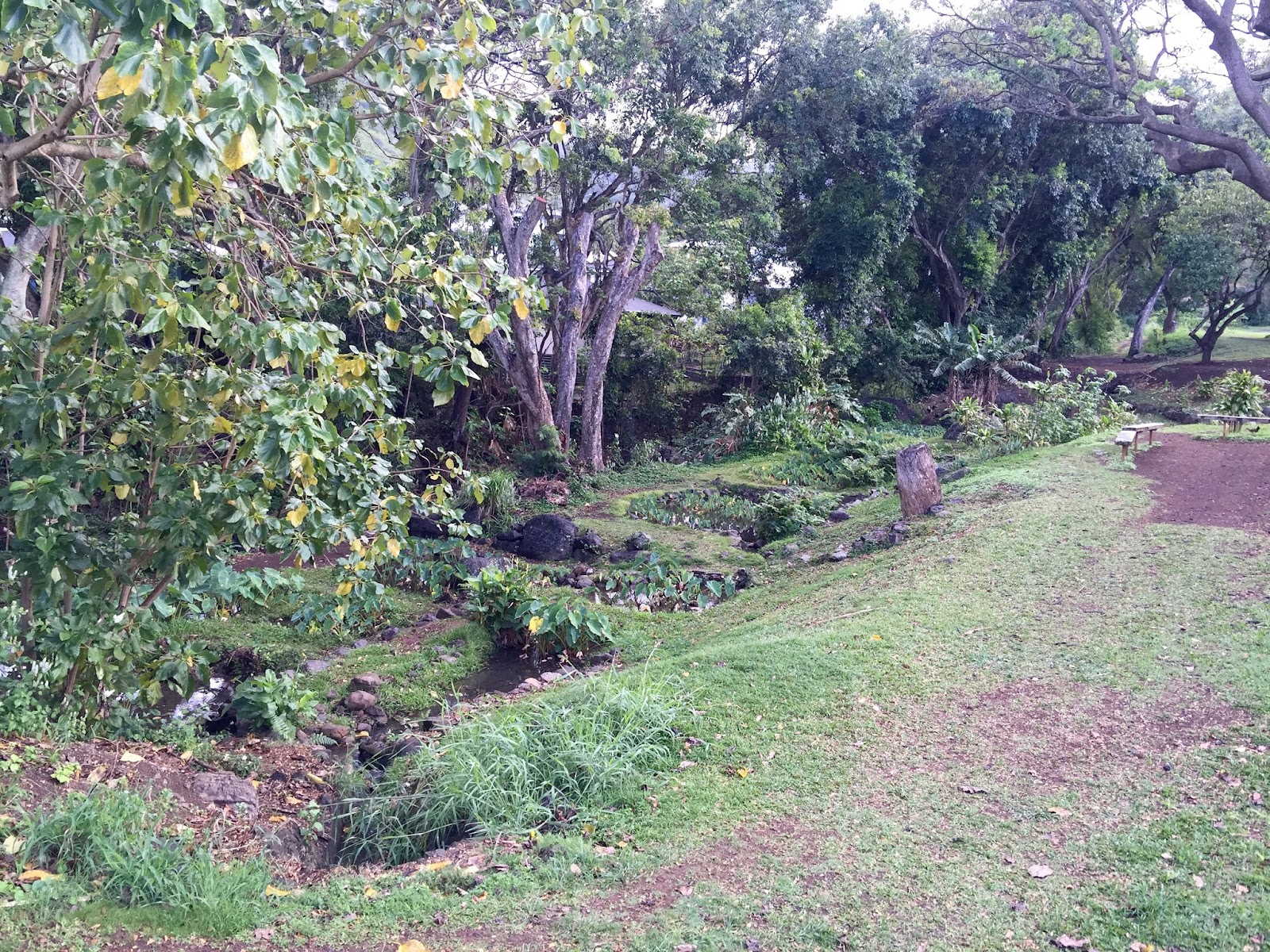
Different grade levels are responsible for different parts of the gardening process.
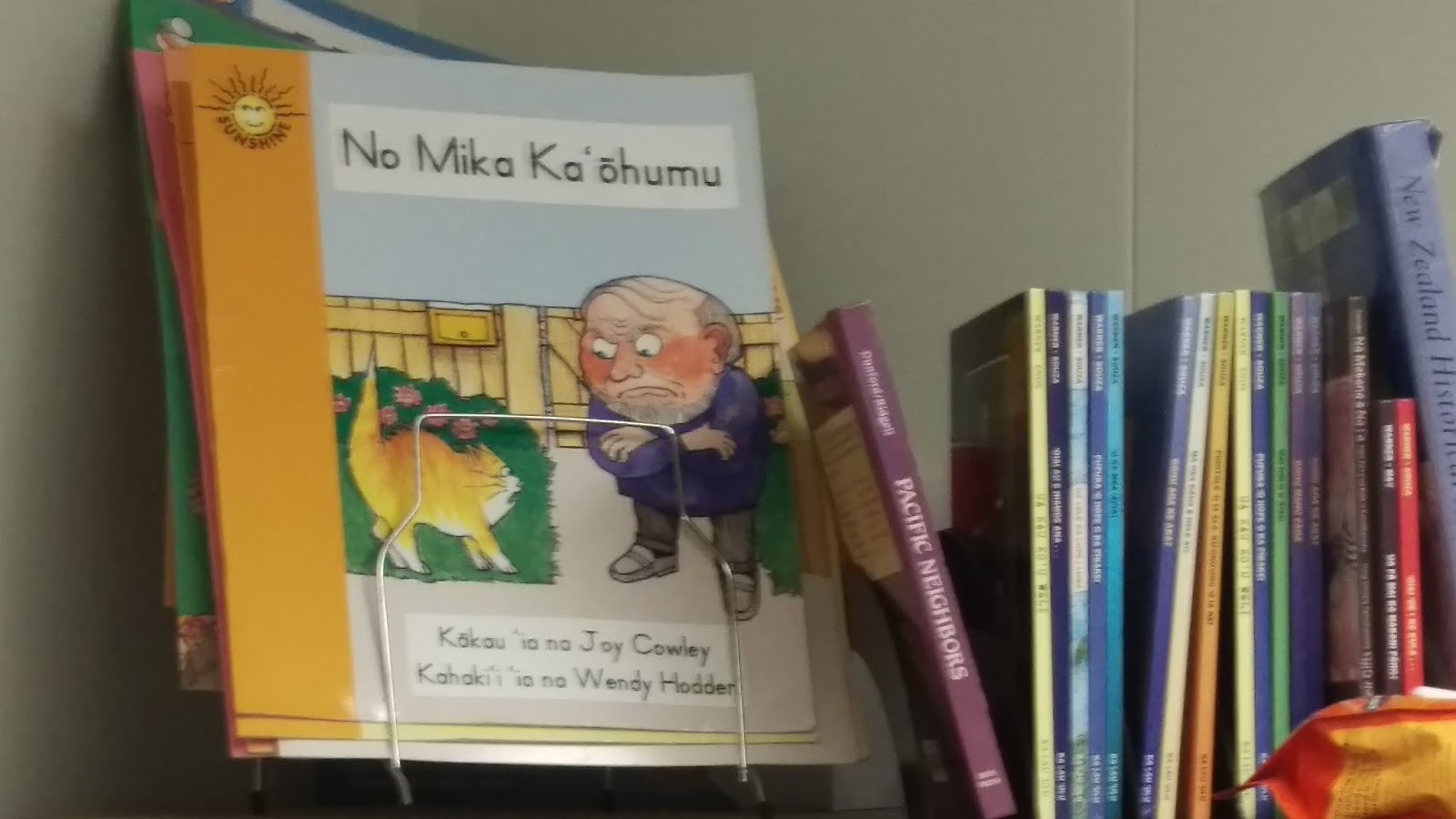 After visiting Ānuenue, Miki handed us off to Tara, (who also visited PES) and we were taken to the College of Ed. at University of Hawai’i. We met quite a few lecturers and noticed they were translating our Sunshine Books into Hawai’ian language for their Kula. So now we have the job of connecting them with Dame Wendy Pye, who owns Sunshine Books and supports Manaiakalani, to see if she would be happy to translate them properly and support their Kula with Sunshine Online.
From there we went on to visit Kaimuku High School where we had another beautiful welcome, were given absolutely gorgeous leis and met more people who watched the Mālama Honua Landing @ Pt England Beach. The kaiako or “kumu” cried when I gave her one of our Hei Matou o Maui, the hooks Donna secured for us from the Carver before we came away. -What a blessing those turned out to be! Hawaiians who received them were particularly moved.
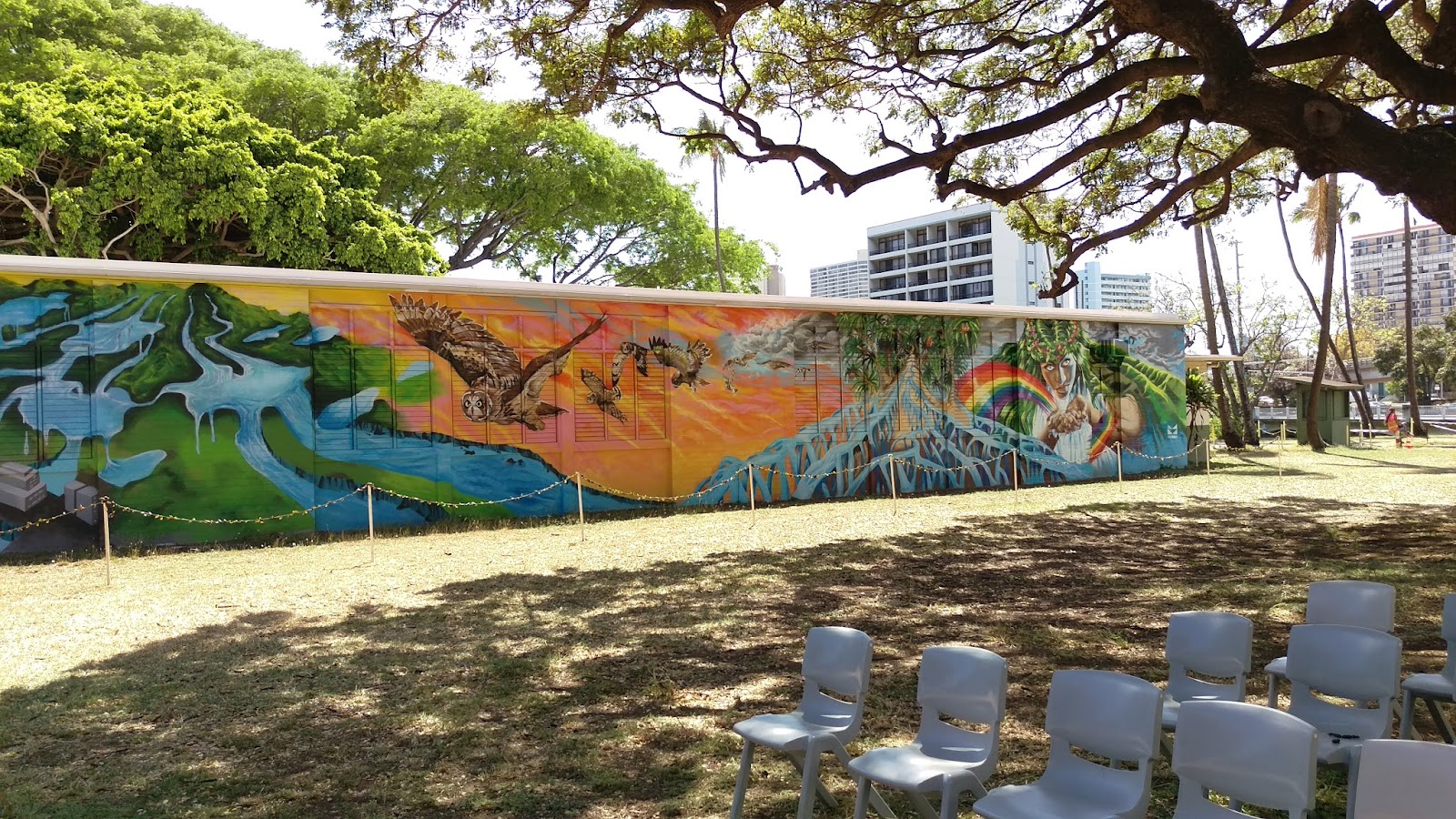
We were taken upstairs through the school to hear the va’a talks. We were honoured guests, seated at the front, as proud young Hawaiian kids ran PLD for teachers, telling them how their lives had been changed by sailing on the va’a. Rather like our Ambassadors. Very real and powerful.
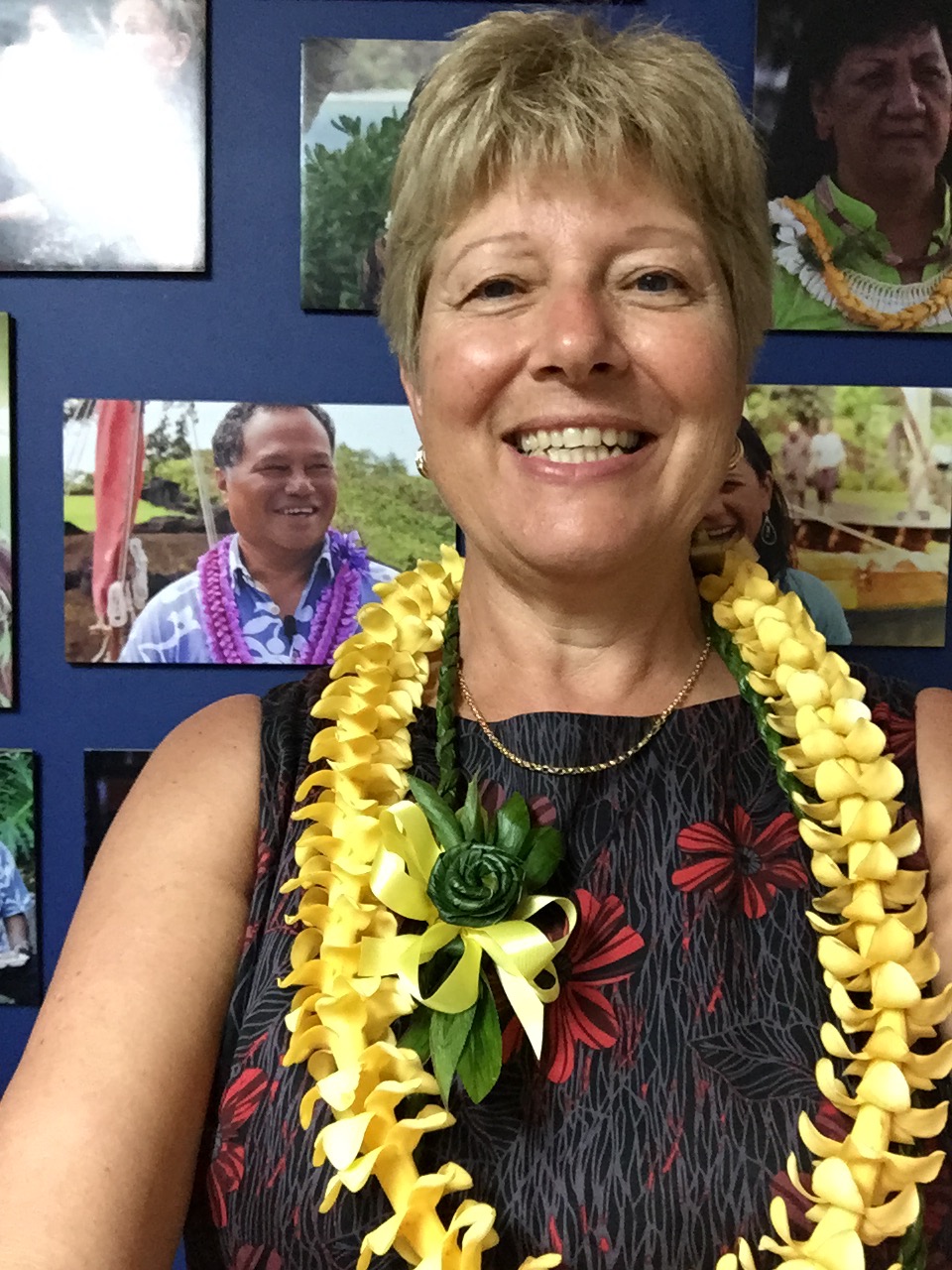 The two facilitating teachers then encouraged the 60 or so staff present from around Honolulu, to include or integrate the va’a in their teaching, rather like we would experience at PLD on Te Ao Maori.
And that still wasn’t the end of the day!
The day culminated with a Pau Hana at ʻŌiwiTV, where we got to catch up again with Bryson, & Na’alehu our camera man & producer along with Maui the editor, who we’d never met, and a whole bunch of the others.
Dorothy conned Maui to create the Manaiakalani (starline) opener for the Manaiakalani Film Festival this year. -Good score! His work is beautiful!
Our good friend and fellow Googler Brendan Brennan, who put together much of this itinerary for us, works here at this school as a Maths Teacher.
The morning we visited, he was courageously 360º live-streaming his maths teaching and his learners’ responses. -Way to go Brendan!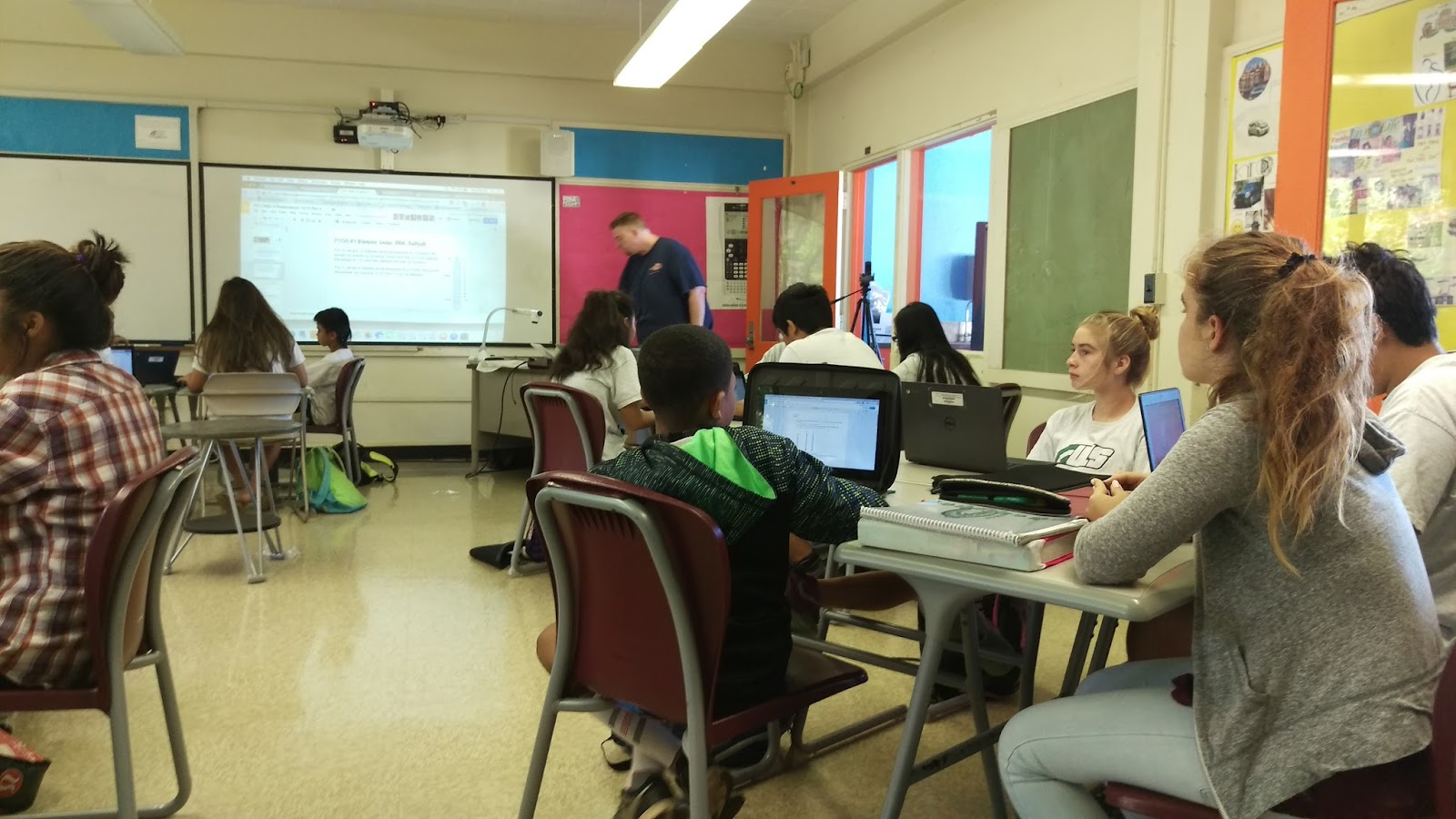
The school was founded on and continues to follow John Dewey’s principles and the original classroom blocks were designed by him. They look rather like NZ 1950’s blocks but with better verandahs and opening french doors where we have push out windows.
Facilities are not flash as the University is unwilling to put more funding into them. Relationships between teacher unions, the Charter school staff and university can be challenging. Charter schools get less funding than state schools, so although this school has very bright learners, the school is not well off. For all this, by following John Dewey’s methods, they get the highest scores in the state once the kids get to Y10. A bit like our kura, the teaching method does not lend itself to good scores in the junior classes, but if everyone holds their nerve and keeps with the programme, it all “comes right” or better than right by Y10. Interesting support for an excellent liberal arts programme. The maths we saw was organised around clever questioning and looked like what the NZ Numeracy Project hoped to achieve but never quite managed. Gotta say though, we only saw it and heard it from Maths Specialists, -so maybe the Herald , supported by Stuart McNaughton during the week, was right!

This is a private K-12 school which is like St Kentigern on steroids.
We went there to see their Maker Space. It is a 4 story purposed designed $20M Maker Space

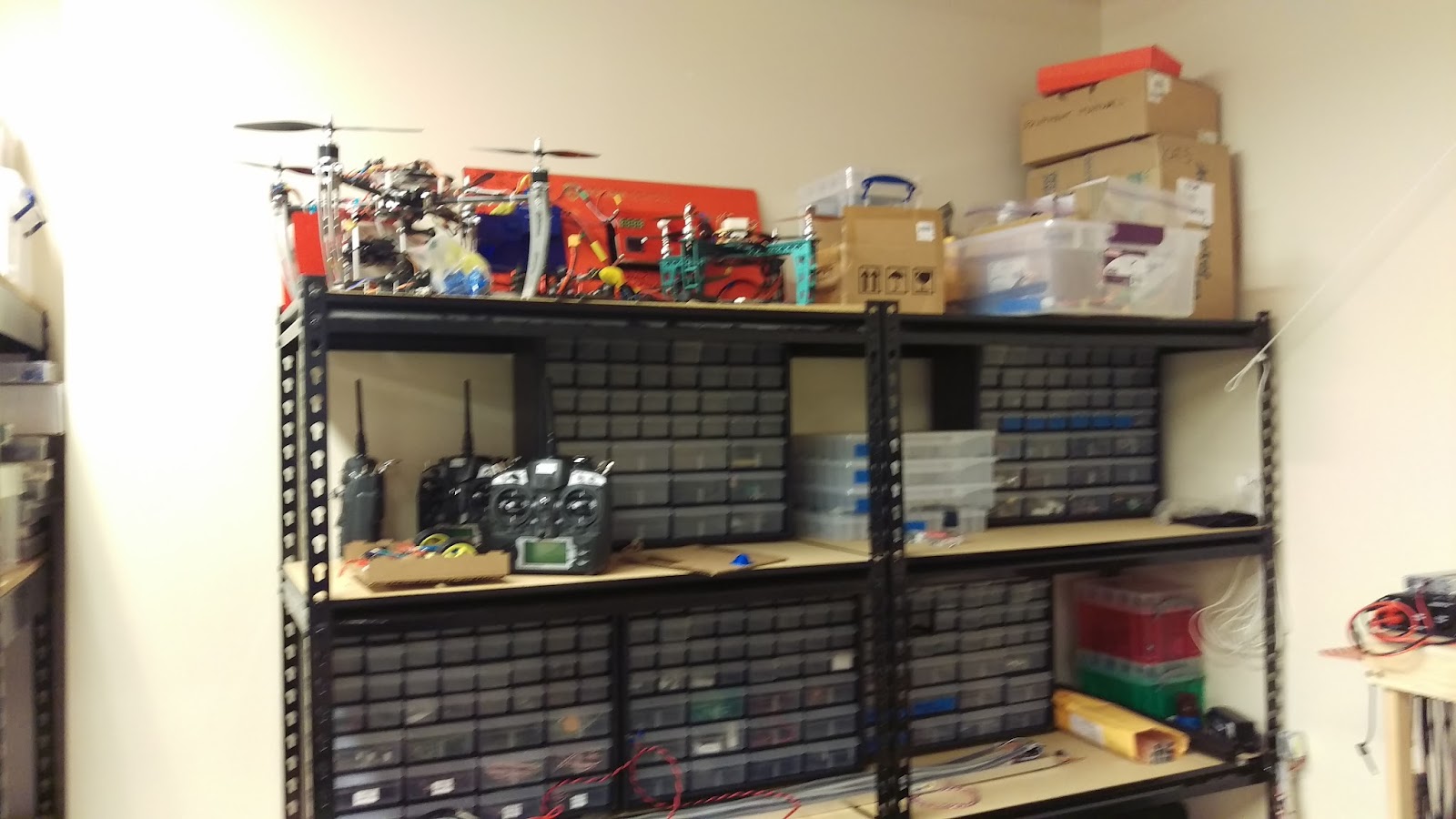
It has laser cutters, fabricators, every kind of big expensive doohicky imaginable. Imagine a school with a water powered steel cutter.
Not a place I would go and boast about our 2 tiny 3D printers!
About 150 kids a week go through this building in class sizes of about 15 with 2 teachers around all the time.
Amazing.
The second floor was a space aged Library which also contains the archives.
The Library seating left the Koru Lounge for dead!
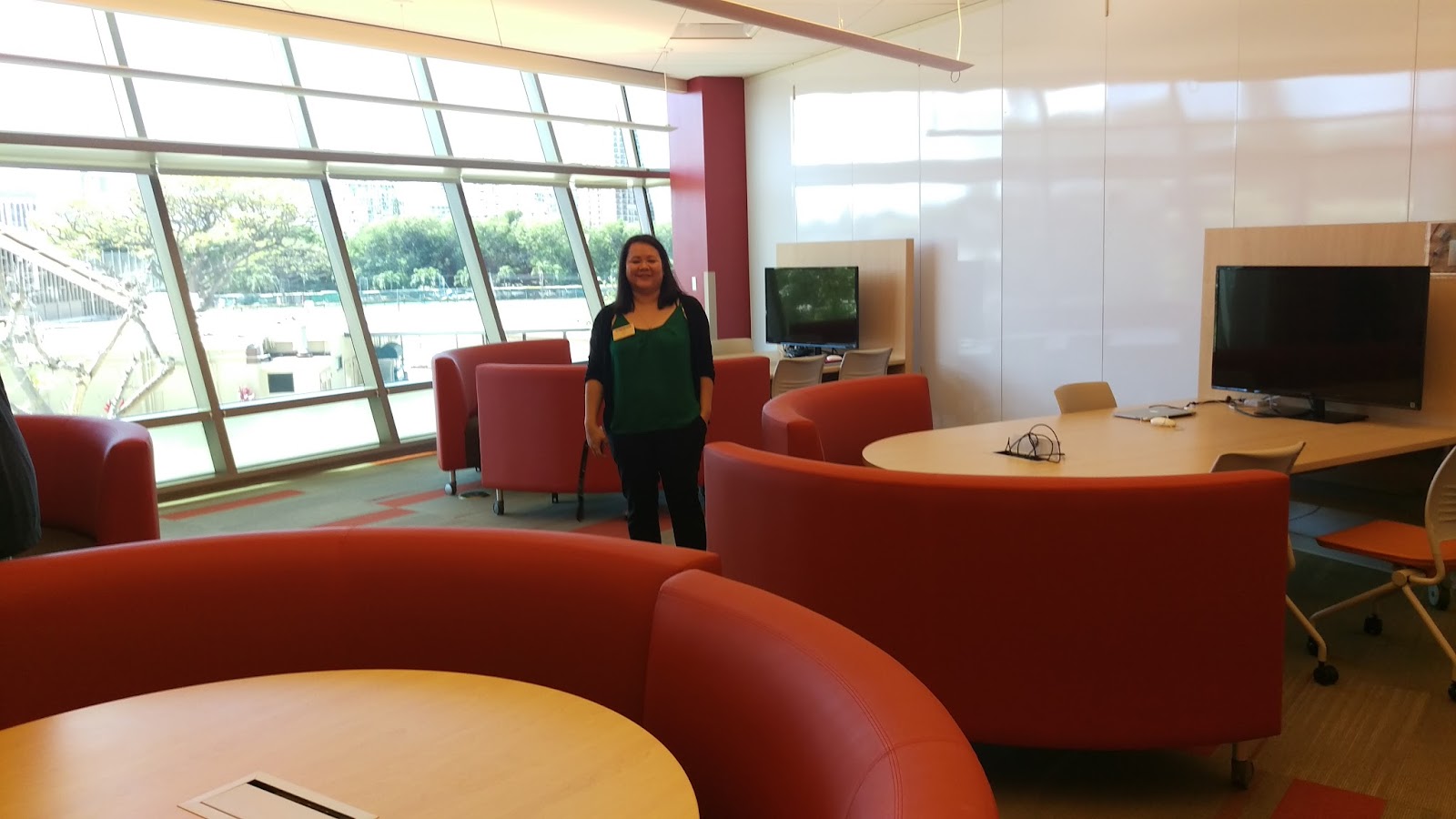 And then we visited Tusitala (our Pt England name for the meeting space)…. Wow. The woman in the picture is the equivalent of our Donna. Her full time job is to look after visitors to the school? -No. To just this building. She’s happy because the Tusitala furniture is all on wheels so it’s easy for her to re-configure.
There is a chef who looks after the commestibles.
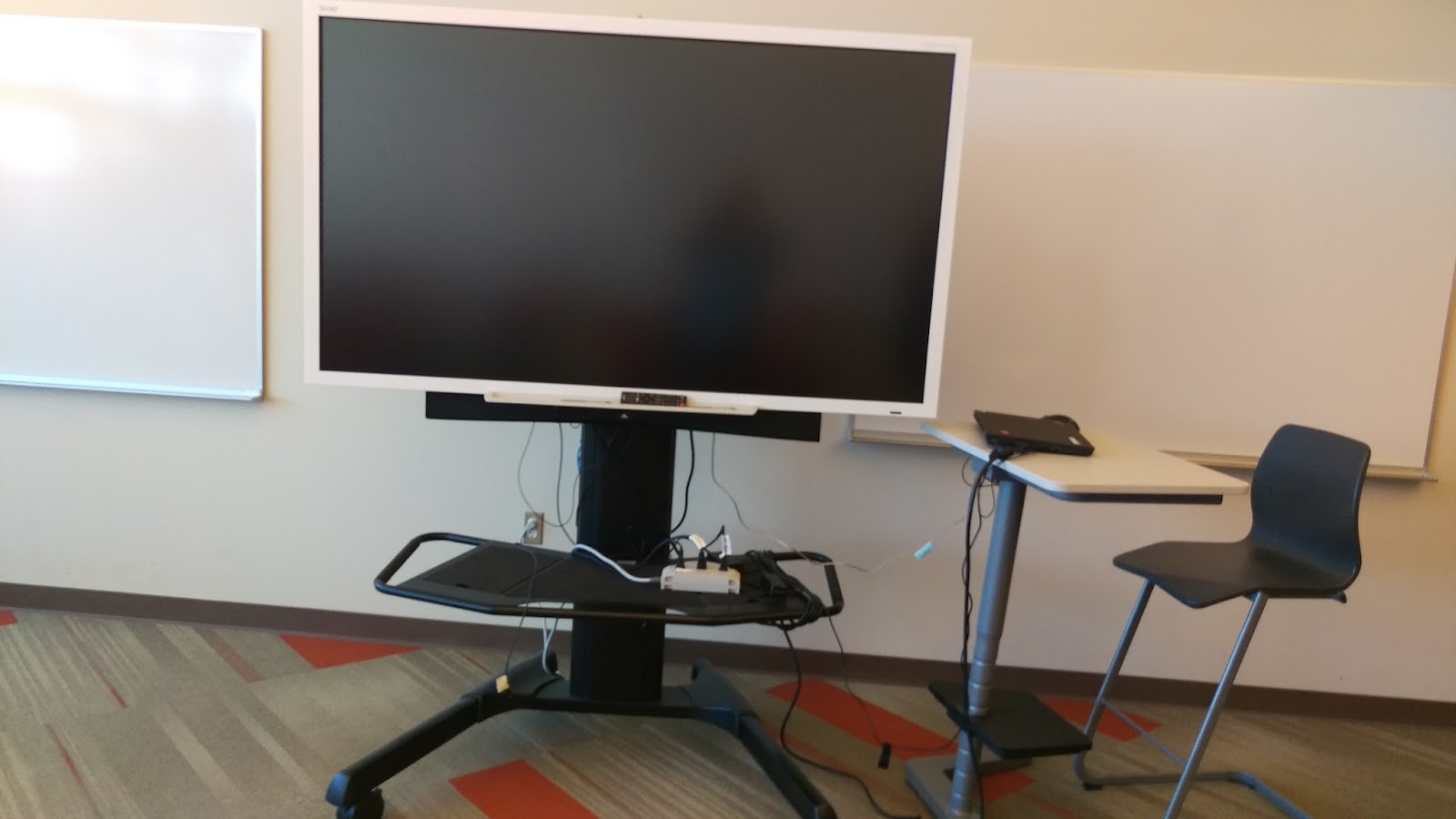 The TV trolleys in their Tusitala will give Garth Screen & Trolley Envy. A bit hard to tell from the pic how large they are. Let’s just settle for enormous.
The 3rd floor is where you take the robots you’ve built to battle it out and has break rooms and lots of space to do things with the things you’ve made.
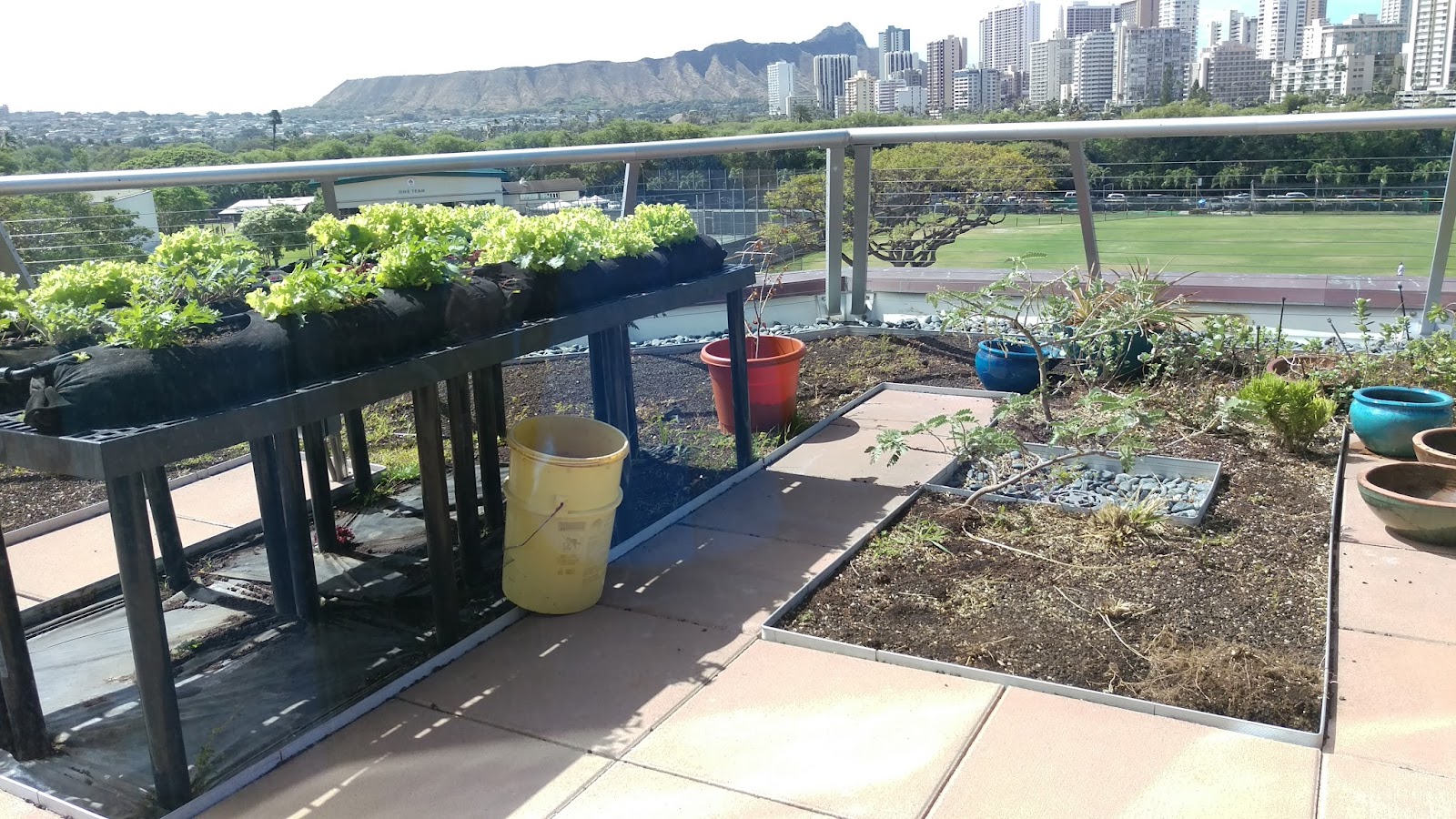
The 4th floor is robotics central and also has the most amazing hydroponic roof gardens for their garden to table project.
This was our final visit in Hawai’i. We went back to our apartment, packed our bags and headed for Paris via LA. We made heaps of new education friends, re-connected with existing ones, got some really challenging ideas and were able to offer help and connections to some who could benefit from this.
We feel greatly blessed by this experience.
Some immediate conclusions or thoughts
Having watched the way some our kids ‘lifted their heads’ during Fiafia, and seeing some schools in Hawai’i really focusing on cultural integration, it has me thinking hard about what we could do at home. They are doing it against difficulty and of necessity to regain what has been lost. We could do it easily by including older people from our community.
I like the way they are using gardens for so much more than gardening or growing food. I like the ‘cultural makerspace’ idea and wonder how you could integrate this with a modern makerspace.
I loved the waka training and began dreaming of foundation funding for a Manaiakalani waka to be stored in a shed @ Pt England next to the Caretaker’s shed, a wider gate in the fence, and the council providing us with a grassy swale down to the beach. Add a Quad to tow it with, a chase boat to keep it safe and we’d be in business. We already own the life jackets. I wonder if the Woolf Fisher Trust would be interested? After all they supplied a white man’s boat to the city of Auckland!